
Industries

Shops and online stores.

Some shops need a site that brings people through the door. Others need to sell from the page itself. Here is what we would build for a boutique, a gift shop, a maker or a brand that sells online.

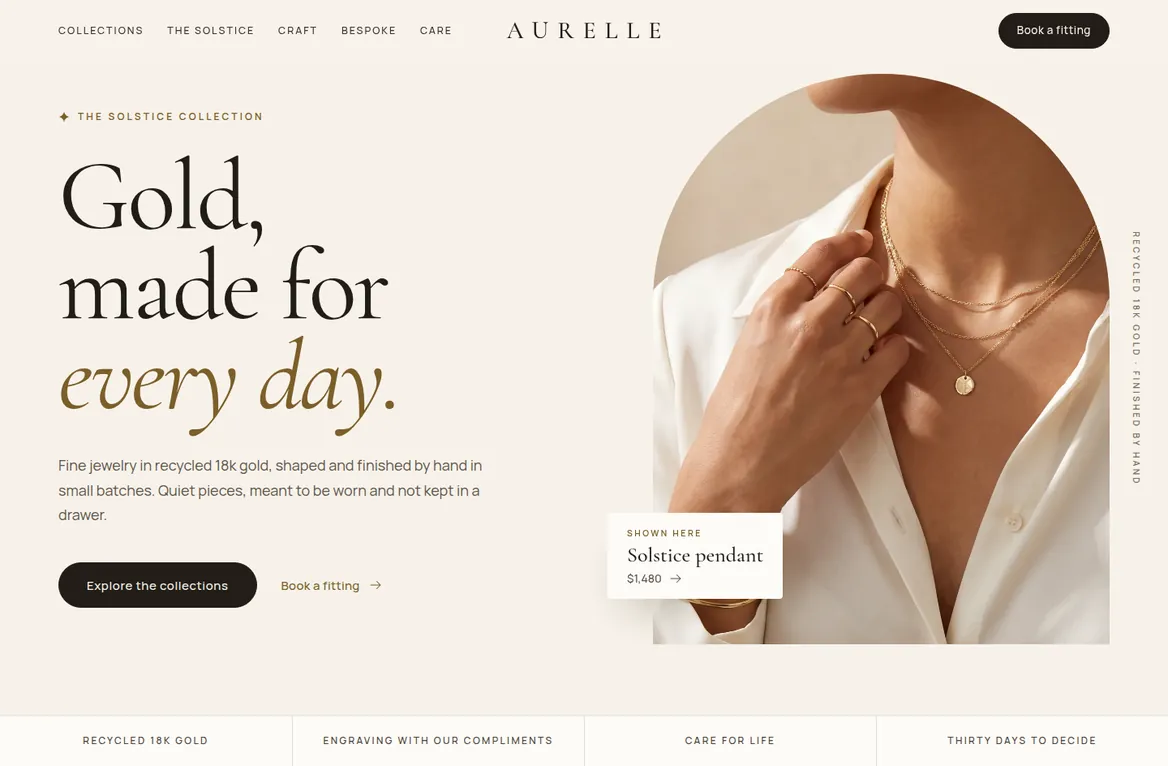
Aurelle concept home page, a hand wearing gold rings and necklaces in an arched frame beside a fine serif headline on ivory.
ConceptAurelle

From your side

What a shop needs from its website.

  • Products have to look as good as they do on the shelf

    Clear photographs, the price, the sizes and colors on offer and the details a customer would ask about at the counter.

  • Buying should take very few steps

    From the product to the bag to payment without a detour, on a phone, with shipping costs and the return policy stated before the customer pays.

  • The money and the customer list should be ours

    Payments should land in an account in our name, and orders and customer details should stay with us if we ever change who looks after the site.

  • People nearby should still find the shop

    Hours, the address, what we carry and whether an order can be picked up in person, easy to find for someone standing two streets away.

The example

A concept, clearly labeled.

Concept

FORM

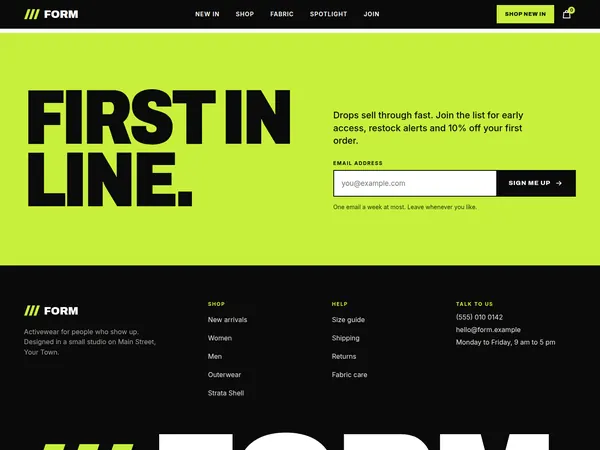
We designed and built FORM to show how we would approach an online store. It is an activewear brand in black, white and one volt lime, with heavy capitals. The page moves from a product grid to categories and on to a product view with a size picker. It is a design for a storefront and takes no real orders. For a quieter shop, see Aurelle, a fine jewelry concept and the picture at the top of this page.

FORM is an invented business. We designed and built it to show how we would approach a site in this field. It is not a client.

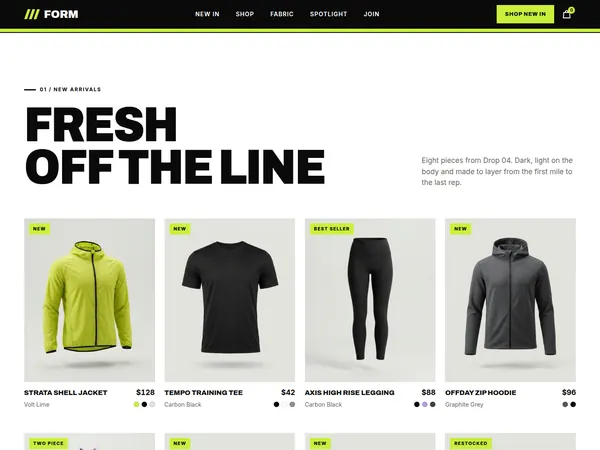
  • A product grid with the name, price and color choices under every piece
  • Labels on products, such as new, best seller and restocked
  • A product view with color swatches, a size picker, a quantity and an add to bag button
  • Shipping, returns, repairs and fit help set out in a row under the product
See the FORM concept
Concept
FORM concept product grid, with a lime jacket, a black tee, black leggings and a grey hoodie, each with its price.
FORM concept product view of a lime jacket, with color swatches, a size picker and an add to bag button.Concept

Process

How a project runs.

  1. Talk it through

    A short call about how your shop runs and what the site has to do.

  2. Written scope

    Pages, features and the price in writing before any work begins.

  3. Design and build

    You review real pages, not just mockups, and send feedback in rounds.

  4. Launch and handoff

    Domain connected, files delivered, accounts in your name. Care is optional.

Questions

Before you ask.

Have you built an online store for a client?

Not yet. FORM and Aurelle are concepts: invented shops we designed and built to show how we would approach a store. Because we have not delivered a client store, we scope each one carefully and quote it in writing before any work begins. Our client sites are on the work page.

What does an online store cost?

A store is scoped and quoted after a call, because the price depends on how many products you sell, how you ship and what the store has to connect to. You get the scope and the price in writing before work begins.

We only sell in person. Do we need a store?

No. A website that shows what you carry, your hours and where to find you is often the right start. Business Starter is $500 for one scrolling page, and Business Website is $700 for up to five pages. A store can be added later. See pricing

Who holds the payments and the customer data?

You do. Checkout is set up in a payment account in your name, so the money goes to you directly and the order and customer records are yours. The payment provider charges its own processing fees, billed by them and not by us.

Can customers pay online and pick up at the shop?

That is something we would plan for from the start: a pickup choice at checkout and an email that tells the customer when the order is ready. It is written into the scope with the rest of the store.

Who adds products once the store is live?

That is decided in the scope. Either you add and edit products yourself in the store account, and we show you how at handoff, or you send them to us and the work is covered by a care plan or billed by the hour.

Who owns the store when it is finished?

You do. You own your domain and your accounts, and after full payment you receive the agreed custom code and deliverables, subject to any third party licenses. Care is optional and never changes ownership.

Tell us about your shop.

We will reply with a clear next step and a written scope.

Start a project